ErUM-Data DEEP
Our Research
 © Belle II / KEK
The DEEP project advances data efficiency and embedded intelligence for scientific and industrial applications. It connects machine learning research with heterogeneous computing platforms, enabling real-time AI deployment in complex environments such as particle physics experiments and accelerator control systems.
A central focus is the co-development of algorithms and hardware-aware toolchains that allow neural networks to run efficiently on modern heterogeneous systems, specifically focussing on AMD Versal devices and SiMa.ai’s embedded ML platforms. The consortium investigates how to compress, quantize, and partition AI models for low-latency, high-throughput operation. This includes adapting frameworks such as ONNX and MLIR to support fine-grained control of computational kernels across FPGA logic and AI engines, optimizing performance while reducing power use.
The partners jointly develop software tools that translate abstract ML models into deployable hardware configurations. These tools allow researchers to map algorithms automatically to the most efficient architecture, combining classical FPGAs and AI accelerators within a single system. The resulting workflow forms an open foundation for future AI deployment in experimental and industrial settings.
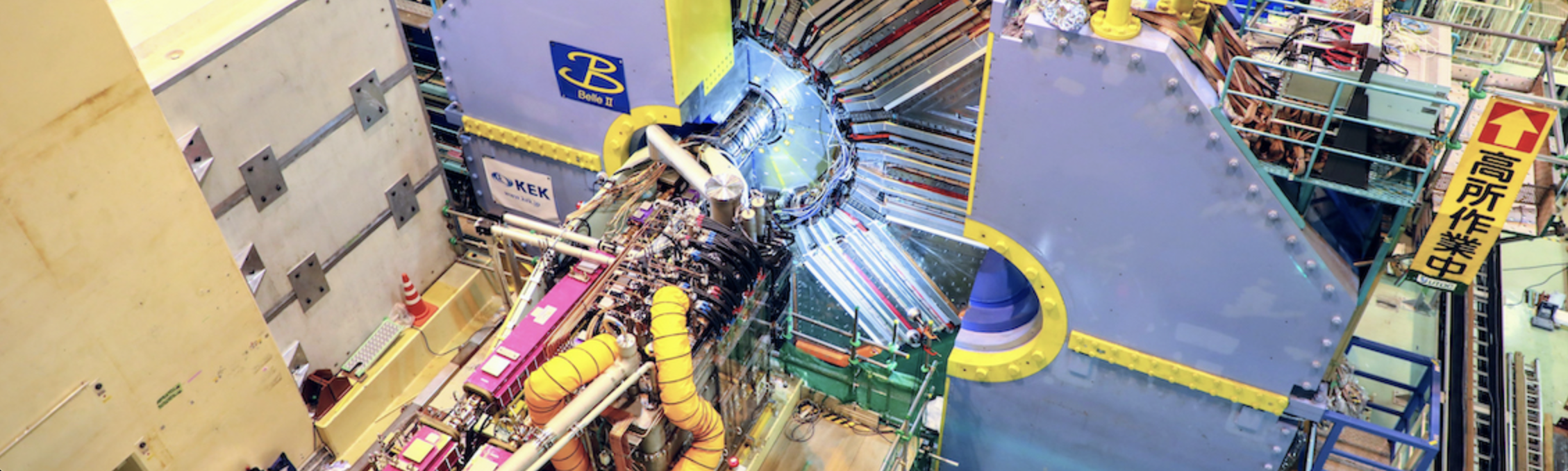
Applied research demonstrates these developments in real-world experiments. At Belle II, the project targets the first complete AI-based real-time tracking for the central drift chamber. At LHCb, it explores machine learning for detector alignment on hybrid architectures, improving speed and energy efficiency. At AMBER and ESS/FRM II, graph-based clustering methods are implemented for high-rate spectrometer and neutron data streams. At the European XFEL and PETRA III, ML algorithms classify anomalies and emulate accelerator behaviour for real-time machine control.
By bridging academic and industrial expertise, DEEP develops methods, software, and demonstrators that make AI on embedded systems more transparent, efficient, and deployable: from laboratory research to production environments.